What do those codes on Bearing mean ? 6309 2Z/C3 ?

Here is a little quick reference guide that explains these bearing codes in detail.

(2 Min Read)

Lets use a 6309 2Z/C3 as an example:

S             6302         2RS
^             ^^^^        ^^
Prefix     Code       Suffix

Prefix:

  • K Cage with roller elements
  • L Removable bearing ring
  • R Ring with roller set
  • S Roll body of stainless steel
  • W Stainless steel deep groove ball bearing

Code:

(6)902 - This first number relates to the bearing type

1-Self-Aligning Ball Bearing

This kind of ball bearing has a spherical outer race, allowing the axis of the bearing to "wander around". This is important because misalignment is one of the big causes of bearing failure.

2-Barrel and Spherical Roller Bearings

3-Tapered Roller Bearing

4-Deep Groove Double-Row Ball Bearing

5-Axial Deep Groove Ball Bearing

6-Deep Groove Ball Bearing (Single row)

Deep Groove Ball Bearing

7-Single-Row Angular Contact Bearing

8-Axial Cylindrical Roller Bearings


6(3)09 - This second number relates the bearing series, which reflects the robustness of the bearing. As you go up the scale below from 9 to 4 the inner and outer race thickness will usually increase along with the ball size, this will be to help cope with extra load.

  • 9 - Very thin section
  • 0 - Extra light
  • 1 - Extra light thrust
  • 2 - Light
  • 3 - Medium
  • 4 - Heavy

63(09) - The 3rd and 4th digits of the bearing number relate to the bore size of the bearing, numbers 00 to 03 have a designated bore size depending on the number.

  • 00 - 10mm
  • 01 - 12mm
  • 02 - 15mm
  • 03 - 17mm

*Note: Numbers over 03 simply have a bore size which is 5 times that of the 3rd and 4th digit.

Suffix:

  • 2 RS Bearing with rubber seal on both sides. RS provides a better seal but more rolling friction than 2Z.
  • RS Bearing with rubber seal on one side, one side open.
  • 2 Z / ZZ Bearing with a metal seal on both sides.
  • Z Bearing with a metal seal on one side, one side open.
  • E Reinforced Design
  • P2 Highest precision
  • K Bearing with taper bore

C2, C3, C4 and C5 

    The standards of internal clearance that bearings are manufactured to are quoted by a C then a number or for standard clearance bearings are denoted to be CN clearance which is never stated and places the bearing between C2 and C3 Clearance.Standard bearings are what are known as CN clearance but this is never stated in the bearing number thus 6205CN would normally be stated as just 6205.

    C3, C4 and C5 bearings are bearings that have an additional internal radial clearance to cope with high speed environments where excess heat is generated. They are not suited to environments where critical alignment is required from the onset e.g. Where blades and cutters are set up to each other. Applications like motorcycle wheels or bicycle wheels do not require C3 rated bearings.

  • C2 is less than normal so the bearing is tighter (designed for slower moving more precise applications that require little or no play in the bearings where the temperature remains fairly constant.
  • C3 is designed for hot running environments; engines etc. where the bearing temp could reach 100deg or more.
  • C4 more extreme temperature applications and higher speed environments.
  • C5 the highest clearance bearing available, are extremely loose to start and can knock until at operating speeds and temperature.

Unless the bearing you are replacing specifically says C3 on it then you should not replace it with a C3 bearing, C3 Bearings are loose to the feel from new and often people complain at the quality of the bearing being poor and having more movement than the one they are replacing. C4 and C5 are even looser still than C3 clearance bearings.
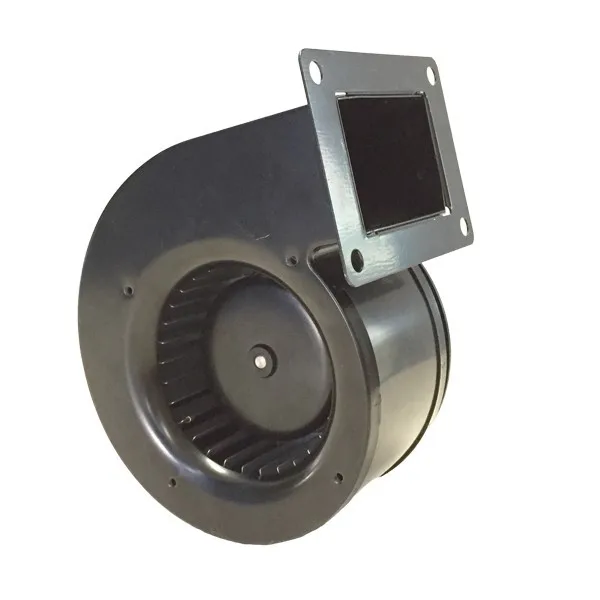

Difference between Compressor , Blower , Fan ...???

Difference between  Compressor , Blower , Fan ...???
Compressor:
Compressor is a mechanical device that increases the pressure of a fluid, either gas or liquid by reducing its volume. The inlet diameter of the pipe will be more than the outlet diameter. This reduces the volume flow rate and thus the pressure of the fluid increases. Thermodynamically, low pressure high volume in the Inlet becomes high pressure low volume at the outlet. Compressor are mainly used for fluid flow at high pressures i.e, the inlet pressure will be low while inlet volume will be high and outlet pressure will be high while outlet volume will be low. There are many types of compressor based on the different principles of working such as 
1. Rotary Compressor
2. Reciprocatory Compressor
3. Centrifugal Compressor
4. Axial Compressor
Compressors are extensively used in refrigerator, air conditioner, pipeline transport of natural gas, petrol refineries, pneumatic compressors are used in industries.

Blower:
Blower is also known as "Centrifugal Fan". This fan increases the velocity of air or gas when it is passed into the impellers. The inlet pressure will be low and the outlet pressure will be high. At constant volume flow rate, the low pressure air becomes high pressure at the outlet. This is mainly due to the rotating blades in the impeller. The kinetic energy of the blades increases the pressure of the air at the outlet. Blowers are mainly used for industry purposes and in climatic control after fan due to its high pressure than fan

Fan:
Fan is a machine used to create a fluid flow. The flow of fluid is increased with the fan. It produces high volume and low pressure than the ambient conditions. It is mainly used as cooling device in computer CPUs and other electronic gadgets apart from climatic condition control.

Main difference between Fan and Blower is blower can achieve more pressure ratio than fan. Blowers can produce more high pressured air than fan. 

Difference between Compressor and Blower - Compressor produces high pressure at low volumes where as blower produces low pressure at high volumes.

Air Blower

What is Relation between Hardness,Ductility,Malleability&Brittleness...

HARDNESS:
 Hardness is a measure of the material’s resistance to localized plastic deformation (e.g. dent or scratch).
DUCTILITY:
 Ductility measures the amount of plastic deformation that a material goes through by the time it breaks.
Ductility is said to be the property of a material to stretch without getting damaged. Metals having ductile property can be stretched into wires. An example is copper wire.
MALLEABILITY: 
Malleability is said to be the property of a material to deform under compression. The metals having malleable property can be rolled or beaten into sheets. An example is aluminium foil.In more simple words, ductility means stretching to wires and malleability means beating to sheets.
Ductility means that a metal can be changed to another form by pulling, compression or twisting.On the other hand,Malleability means that a metal can be changed into another form by beating or hitting it hard.
Ductility also refers to the ability of a metal to change its form under tensile stress. Malleability refers to the ability of a metal to change its form under compressive stress.

A metal’s ductility is measured by looking at its tensile strength. The tensile strength inspects how far a metal could stretch without breaking. A metal’s malleability is measured by looking at how much pressure it can withstand without breaking.The bend test is the commonly used test for determining the ductility of a metal.Gold and silver are the top ranking ductile and malleable metals.
The two properties of Malleability and ductility do not always correlate in metals. For example, gold is both malleable and ductile and lead is only malleable.
BRITTLENESS:
A material is Brittle if, when subjected to stress, it breaks without significant deformation (strain). Brittle materials absorb relatively little energy prior to fracture, even those of high strength. Breaking is often accompanied by a snapping sound.
TWO MEASURES OF DUCTILITY:
1) Percent Elongation (%El )
2) Percent Reduction In Area
• Highly ductile metals can exhibit significant strain before fracturing, whereas brittle materials frequently display very little strain.
• An overly simplistic way of viewing ductility is the degree to which a material is “forgiving” of local deformation without the occurrence of fracture.
Brittle materials: %EL £ 5% at fracture
Ductile materials: %EL and %RA both ³ 25%.

Notes on Nuts and Bolts...

Notes on Nuts and Bolts...

Notes on Nuts and Bolts

            A screw thread is a helical groove on a shaft. When used for delivering power, it is called a drive screw. Drive screws aren't really all that efficient, as they loose a significant amount of power to friction. However, this friction can be put to use in the case of threaded fasteners. You might say that a drive screw is an inclined plane wrapped around a post, while a fastener is a wedge wrapped around a post.

Bolt Terms:

Nut and Bolt terms
A 1/2-13UNC-2A-3 bolt, with a 2" thread and a 1" shank.

               As nuts and bolts are not perfectly rigid, but stretch slightly under load, the distribution of stress on the threads is not uniform. In fact, on a theoretically infinitely long bolt, the first thread takes a third of the load, the first three threads take three-quarters of the load, and the first six threads take essentially the whole load. Beyond the first six threads, the remaining threads are under essentially no load at all. Therefore, a nut or bolt with six threads acts very much like an infinitely long nut or bolt (and it's a lot cheaper).
Stress on threads
Stress on bolt threads. Note how the majority of
the stress is on the first thread to the left.
Image from Spiralock.
      Thread%%Sum
134%34%
223%55%
316%71%
411%82%
59%91%
67%98%

           There is little point in having more than six threads in anything. Nuts with National Coarse threads typically have 5 threads in them, whereas nuts with National Fine threads have about 8 threads. Nuts are usually stronger than the bolts they are on, which is to say that the bolt will usually break before the nut strips.
           It is often said that two threads must be exposed above a nut. The reason for this is that the first two threads of a bolt are often poorly formed, and may not engage the nut properly. If they're not doing their share, the other threads in the nut will be overloaded, and the nut may strip.

Source : Gizmology